Jusqu'au 27 septembre 2026
|
|
|
|
 |
|
Ce qui agit
sans se nommer |
|
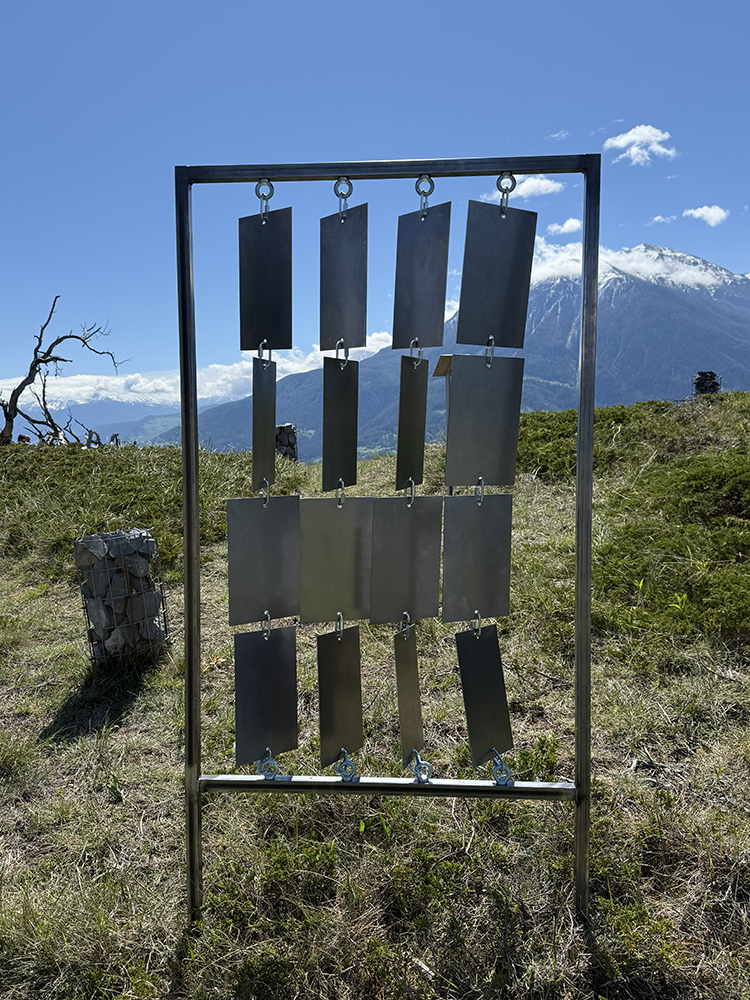
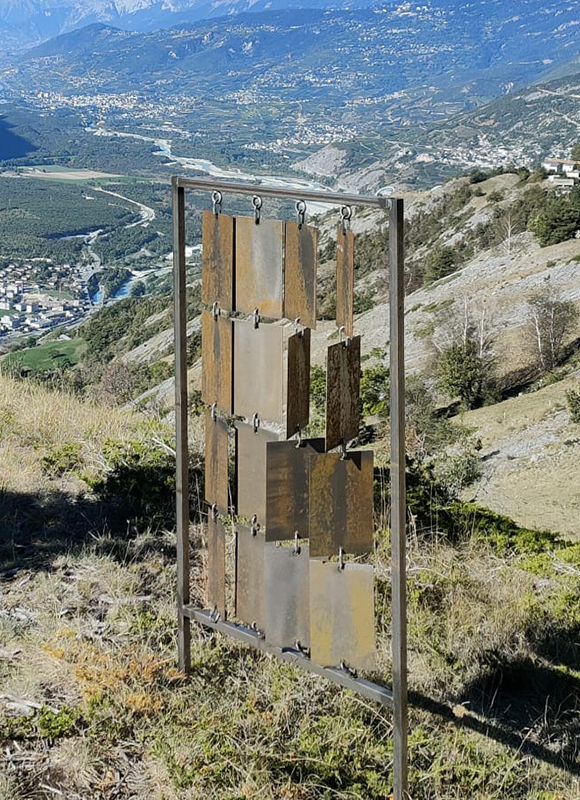
Bilan après quatre moisPendant quatre mois, la sculpture est restée exposée au paysage et aux éléments. Les plaques métalliques, initialement brillantes et conçues pour réfléchir la lumière, se sont progressivement oxydées sous l’action de l’eau, de l’air et du temps. Leur surface est devenue mate et orangée, tandis que la structure protégée contre la rouille est restée presque intacte. Une tension est ainsi apparue entre ce qui résiste et ce qui se laisse transformer. J’avais interprété la poésie de Rilke à travers la matière, la lumière, le vent et le paysage. Puis la nature a poursuivi l’œuvre sans mon intervention. Ce qui agit sans se nommer est devenu visible par les traces qu’il laisse. La disparition du reflet m’interroge particulièrement : le lumineux s’efface et le temps apparaît. En résonance avec le « Tu dois changer ta vie » de Rilke, l’œuvre ouvre ainsi une question : que devient ce qui s’expose au monde, entre résistance, transformation et possibilité de renouvellement ? La sculpture restera encore dans le paysage. L’expérience n’est donc pas terminée : ce qui agit sans se nommer continue d’agir. |
|
|
That Which Acts Without Naming Itself Inspired by Rainer Maria Rilke’s Valais Quatrains, this installation brings poetry into the forest. Thin, suspended metal plates, resembling the pages of a book, capture the light, move with the wind, and produce subtle resonances reminiscent of Valais church bells. Exposed to rain, sunlight, and oxidation, the work gradually transforms over time. Nature is no longer a backdrop but a creative partner: entrusted to the forest, the sculpture reveals the landscape’s invisible forces and makes metamorphosis its essential material. The installation is situated along the Lyrikweg in Guttet-Feschel, a poetry trail in the heart of the Valais landscape, where the forest, light, wind, and natural sounds enter into dialogue with the work of Rainer Maria Rilke. |
|
Assessment after four monthsFor four months, the sculpture has remained exposed to the landscape and the elements. The metal plates, initially bright and designed to reflect the light, have gradually oxidised under the effects of water, air, and time. Their surfaces have become matte and orange-toned, while the structure, protected against rust, has remained almost intact. A tension has thus emerged between what resists and what allows itself to be transformed. I had interpreted Rilke’s poetry through matter, light, wind, and landscape. Then nature continued the work without my intervention. What acts without being named has become visible through the traces it leaves behind. I am particularly intrigued by the fading of the reflection: the luminous recedes, and time appears. Echoing Rilke’s “You must change your life,” the work raises a question: what becomes of that which exposes itself to the world, between resistance, transformation, and the possibility of renewal? The sculpture will remain in the landscape for a while longer. The experience is therefore not yet over: what acts without being named continues to act. |
|